




Are Magnetic Number Plates Legal? How They Work and Whether They Stay On

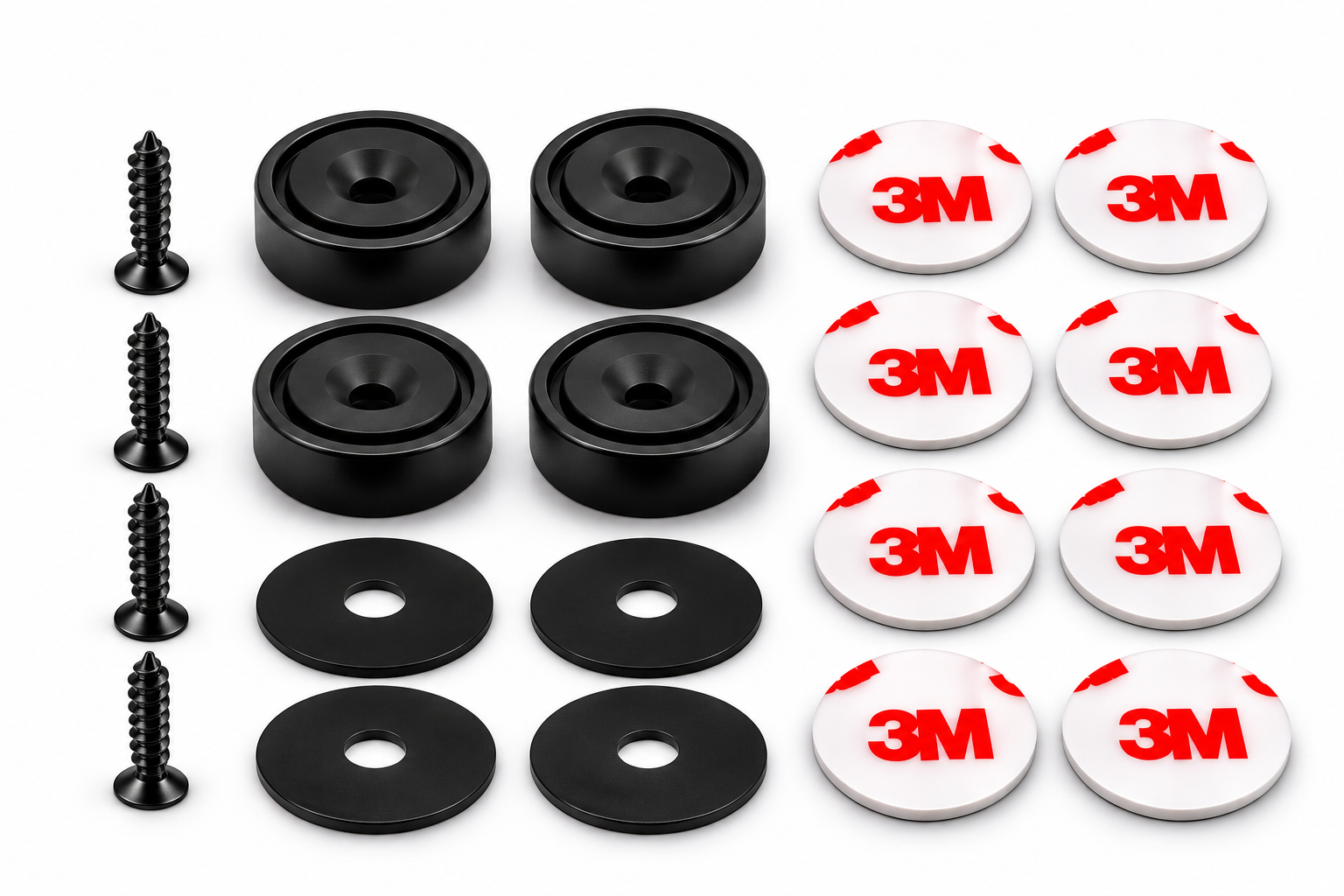
Are magnetic number plates legal? The short answer: yes. UK law says your number plates must be fixed to the car, upright, in the right place and easy to read, but it doesn’t say how they have to be fixed. A magnetic number plate kit, where magnet mounts are screwed to the car and metal discs are stuck to the back of the plate, is legal as long as the plate is held securely and is itself a road-legal plate.
Written by the PlateBoss team, led by owner HD. We’ve been making plates since 2019 and are a DVLA-registered number plate supplier with a workshop in Hounslow, west London. Checked against the Road Vehicles (Display of Registration Marks) Regulations 2001, GOV.UK and the DVSA MOT inspection manual, November 2026. How we write our guides.
In this guide
- How magnetic number plates work
- Are magnetic number plates legal?
- Do they stay on?
- How to fit a magnetic number plate kit
- Magnetic vs pads vs screws vs holders
- Who they suit best
- FAQs

How magnetic number plates work
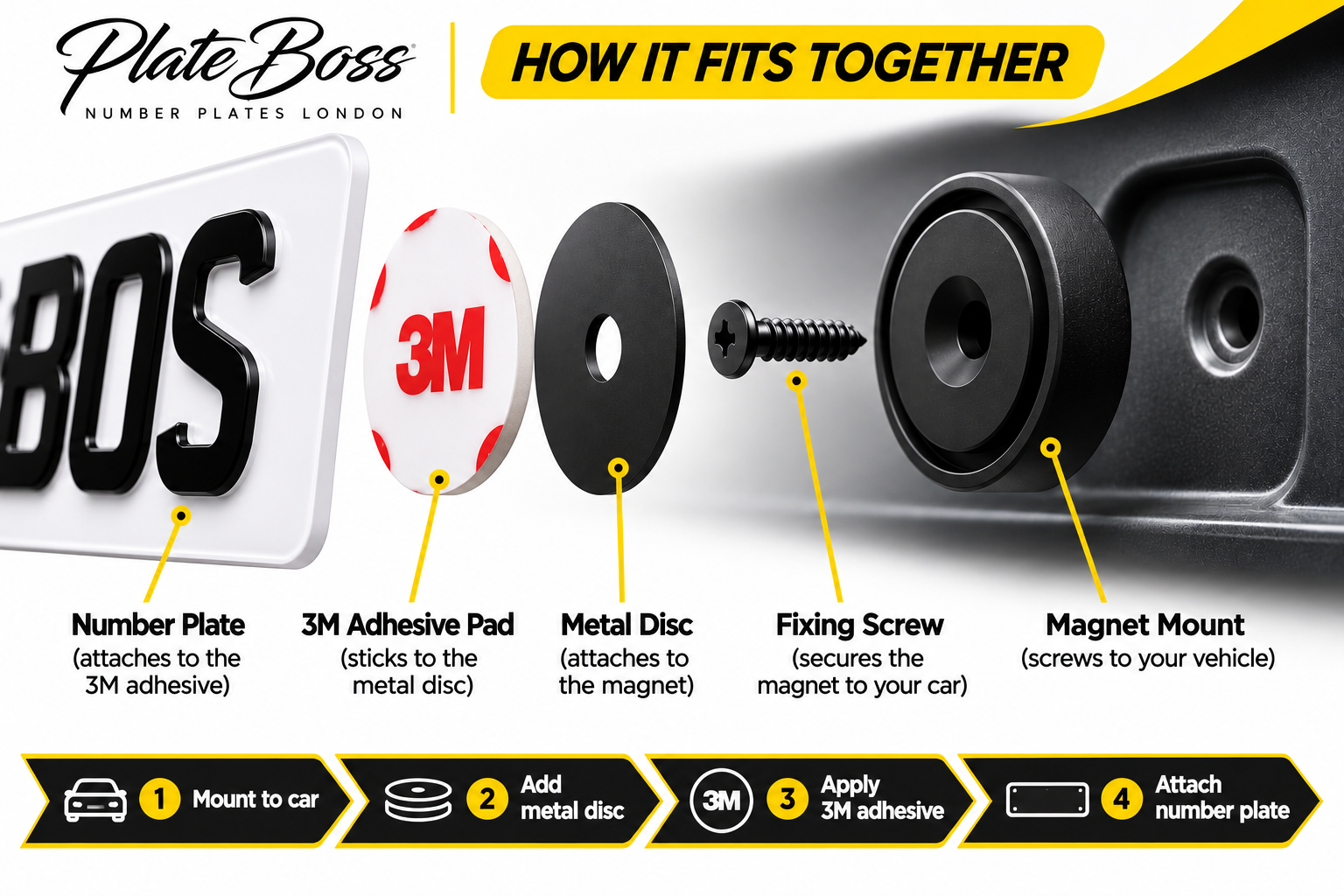
A “magnetic number plate” isn’t a special kind of plate. It’s a normal road-legal plate fitted with a magnetic fixing kit instead of screws or sticky pads. There are two halves to it:
- On the car: four small magnet mounts, each screwed firmly into place. They stay on the car permanently.
- On the plate: four thin metal discs, each stuck to the back of the plate with a 3M adhesive pad. They stay on the plate permanently.
When you offer the plate up, the discs meet the magnets and the plate holds in place. Nothing goes through the plate, and nothing is glued to your paintwork.
Are magnetic number plates legal?
Yes. The Road Vehicles (Display of Registration Marks) Regulations 2001 say a plate must be fixed to the front and rear of the car, vertically (or as close to vertical as is reasonably practicable), and in a position where the characters are easily distinguishable in normal daylight. They say nothing about screws, pads or magnets. So the fixing method is up to you, as long as the result does the job.
In practice that means four things:
- The plate is secure. The DVSA MOT inspection manual treats a plate that’s missing, or so insecure it’s likely to fall off, as a major defect. A magnetic kit has to hold the plate firmly, which is why ours uses strong fixing magnets and four mounting points.
- It’s in the right place. Our number plate position guide covers where front and rear plates have to sit.
- The plate itself is legal. A magnetic fixing doesn’t change the rules for the plate: reflective material, the standard font and spacing, solid black characters and the BS AU 145e mark. Our plates are made to that standard by a DVLA-registered supplier.
- It’s on whenever you drive. Being able to take a plate off is handy for a valet or bodywork, but the car must display both plates whenever it’s on the road. Driving without a plate, or with one that’s hard to read, can mean a fine of up to £1,000.
So, are magnetic number plates legal? Yes. Because the mounts are screwed to the car and the discs are bonded to the plate, a magnetic kit is a fixing like any other, and it’s no less legal than pads or screws.
Want a plate that stays put without drilling it? Our magnetic number plate fixing kit is £25 for a front and rear pair.
See the magnetic fixing kitAsk us on WhatsAppDo magnetic number plates stay on?
A proper kit does, and that matters as much as the law: a plate that falls off fails the MOT. The weak versions you sometimes see online are flat, fridge-style magnets stuck to the bodywork, and those are the ones that give magnetic plates a bad name. Ours works differently: each corner has its own magnet mount screwed firmly to the car and its own metal disc bonded to the plate with 3M adhesive, so the plate is held at four points. The mounts use strong fixing magnets designed to hold a plate at speed and in wet weather.
Two things make the difference between a plate that stays put and one that doesn’t: the mounts must be screwed in firmly, and the discs need time to bond. Press the plate on for at least 60 seconds and leave it 24 hours before you take it off for the first time.
How to fit a magnetic number plate kit
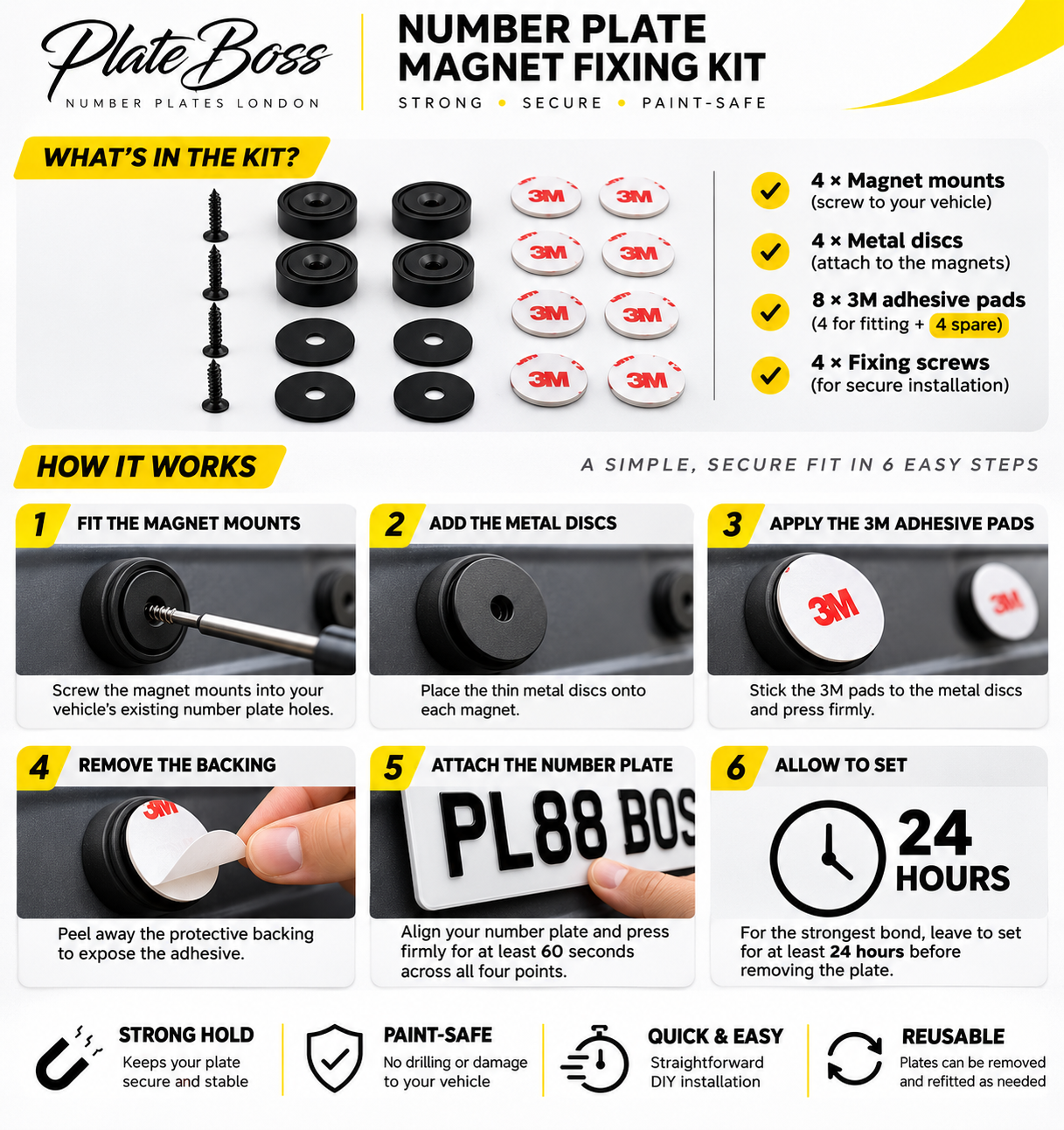
- Fit the magnet mounts. Screw them into your existing number plate holes, or into any firm surface if your car doesn’t have holes. The screw has to sit firmly.
- Add the metal discs. Place a disc onto each magnet.
- Apply the 3M pads. Stick a pad to each metal disc and press firmly.
- Remove the backing to expose the adhesive.
- Attach the number plate. Line it up, then press firmly across all four points for at least 60 seconds.
- Leave it 24 hours before taking the plate off, so the adhesive reaches full strength.
Once it’s set, the discs stay on the plate and the plate lifts on and off the mounts by hand. The kit includes 4 spare pads, so you have a second set if you ever move the discs to a new plate. Our main guide to fitting number plates covers pads, screws and holders too.
Magnetic vs adhesive pads vs screws vs holders
| Adhesive pads | Screws + caps | Frame holder | Magnetic kit | |
|---|---|---|---|---|
| Drill through the plate? | No | Yes (voids our warranty) | No | No |
| Needs holes in the car? | No | Yes | Uses existing fixing points | No, any firm surface |
| Plate removable and refittable? | No, it’s stuck for good | Unscrew it | Plate is stuck into the holder | Yes, by hand |
| Curved bumpers and plastic mounts | Can struggle to grip | Depends on the holes | Good | Good |
| Price with your plates | £3.99 (8 pads) or £6.99 (10 + 3 thick) | £3.99 | £18 (standard) or £20 (borderless), pair | £25, pair |
Pads are still the quickest, cheapest fix for a flat, clean surface. Screws are what many older cars were built for, but drilling one of our plates voids its 3-year warranty, and screw holes are the most common place we see plates crack. Our pre-drilled number plates guide explains why we avoid drilling. The magnetic kit is the one to choose when you want no holes in the plate, no permanent glue on the car, and a plate you can take off.
Who magnetic number plates suit best
- Cars with curved bumpers, where a flat plate on pads is under strain and tends to lift at the corners.
- Plastic or coated plate mounts, such as the black front base on many Mercedes, where pads don’t bond well. Because the mount screws into the surface rather than relying on adhesive, the coating stops being a problem.
- Drivers who take plates off for a valet, detailing, paintwork or a wrap, and don’t want to scrape off pads and re-stick every time.
- Anyone changing plates later, for example after putting a different registration on the car, who wants a clean swap.
If your plates simply need replacing, start with our guide to how long number plates last, and if you’re unsure about the front plate rules, see front number plate law.
Plates and fixings
-50%
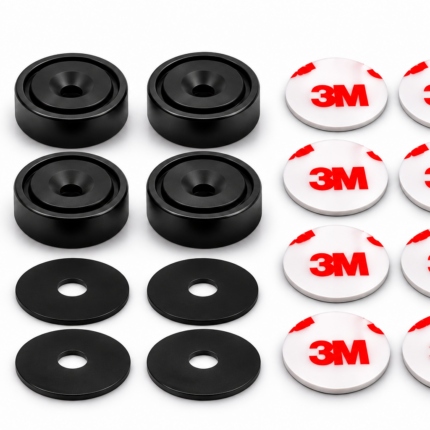
Magnetic Number Plate Fixing Kit (Front & Rear Pair)
Original price was: £50.00.£25.00Current price is: £25.00.
Bevelled Number Plates
£69.99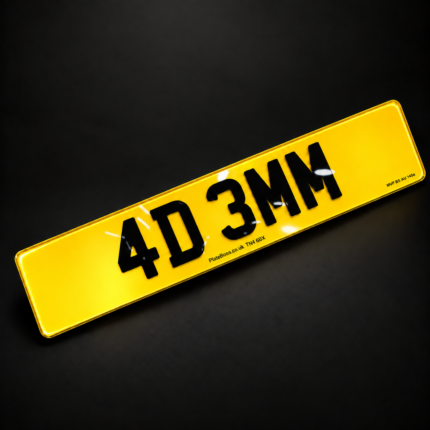
4D 3mm Number Plates
£44.99
Replacement Number Plates
£29.99Order the magnetic fixing kit on its own, or add it when you build your plates. Pick “Magnetic Fixing Kit” in the Choose Fixing Kit step.
Buy the magnetic kit (£25)All fixings and accessoriesWhatsAppMagnetic number plates: FAQs
Are magnetic number plates legal in the UK?
Yes, as long as the plate is securely fixed, sits upright in the right place and is itself a road-legal plate. The law says plates must be fixed to the vehicle but doesn’t say how, so a magnetic mount that’s screwed to the car and holds the plate firmly is fine.
Do magnetic number plates fall off?
Not with a proper kit. Ours uses strong fixing magnets screwed to the car, with a metal disc permanently stuck to each corner of the plate, so it holds at speed and in wet weather. Cheap fridge-style magnets are a different thing and we wouldn’t use them.
Do you need holes in your car for a magnetic number plate kit?
No. The magnet mounts screw into your existing plate holes if you have them, or into any firm surface if you don’t, which is why the kit suits curved bumpers and plastic mounts.
Can I take a magnetic number plate off?
Yes, the plate lifts off the mounts by hand and goes straight back on, with nothing to re-stick. Just don’t drive without it: your plates must be displayed whenever the car is on the road.
Will a magnetic number plate pass the MOT?
Yes, if the plate is secure and road legal. An MOT tester fails a plate that’s missing or so insecure it’s likely to fall off, so make sure all four mounts are screwed in firmly.
How much is a magnetic number plate kit?
Our magnetic number plate fixing kit is £25 for a front and rear pair, with 4 magnet mounts, 4 metal discs, 8 3M pads and 4 screws. You can add it to a plate order or buy it on its own.